Type YOTKGtsFoyn 2-144 fibers Cable Mining cable, unfilled, armoured
This armored Cat6 fiber optic signal cable is specially developed and manufactured for intelligent mine automation transformation, providing synchronous transmission of video signals and sound signals, and real-time monitoring of mining equipment, which can ensure the automation and intelligent transformation needs of mines.
Type YOTKGtsFoyn 2-144 Fibers Mining Cable, Unfilled, Armoured
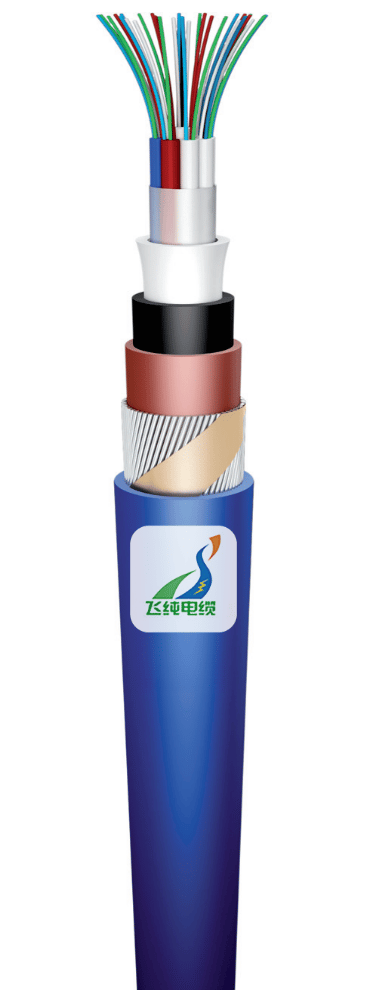
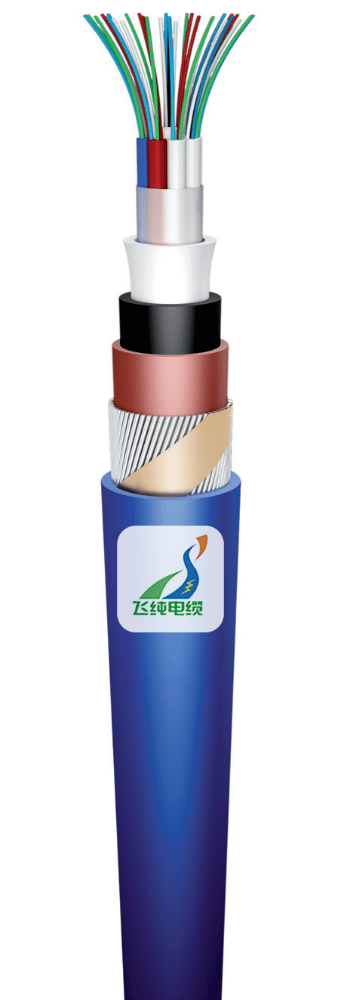
The Type YOTKGtsFoyn cable is a robust, Cat6 fiber optic signal cable designed specifically for mining applications. Engineered for the demanding environment of underground mines, this cable supports intelligent automation by enabling the synchronous transmission of video and audio signals, as well as real-time monitoring of mining equipment. It ensures that critical communication and control systems remain reliable in harsh conditions.
Construction & Materials
Fiber Optics:
The cable contains optical fibers compliant with ITU-T G.652D (or as specified in the attached documentation). The fibers are color-coded according to IEC 60304 standards (red, green, blue, white, violet, orange, grey, yellow, brown, pink, black, turquoise) to simplify identification and maintenance.
Tube & Insert Identification:
The cable’s tubes (or liners) are uniquely identified – the first tube is red, the second is blue, while any additional tubes are natural in color. If an insert is present, it is marked in black.
Central Reinforcement:
At the core, a 2.5 mm diameter FRP (Fiber Reinforced Polymer) rod provides mechanical strength and supports the overall structure of the cable.
Tube Filler:
Each tube is filled with a thixotropic gel that stabilizes the internal components and helps protect the fibers from mechanical shocks.
Moisture Barrier:
A swelling (expanding) tape with an approximate thickness of 0.20 mm serves as an effective moisture barrier, preventing water ingress which is critical in damp underground environments.
Inner Jacket:
The inner jacket is made of extruded PVC (polwinit) in black (RAL 9005) with a nominal thickness of about 1.4 mm. This layer offers additional insulation and protection to the cable’s core.
Armour:
For enhanced mechanical protection, the cable is armoured with steel wires (diameter 1.54 mm). This armouring makes the cable resistant to both longitudinal and transverse stresses encountered in mining installations.
Outer Jacket:
The final layer is an extruded flame-retardant PVC (FR) outer jacket in blue, with a nominal thickness of approximately 1.5 mm. This jacket not only protects the cable from environmental damage but also provides excellent flame resistance.
Optical & Mechanical Performance
Attenuation:
The fiber attenuation is low, with values of ≤ 0.4 dB/km at 1310 nm and ≤ 0.25 dB/km at 1550 nm (for single-mode fibers), ensuring high-quality signal transmission over long distances.
Mechanical Properties:
The cable is available in various fiber counts (ranging, for example, from 4 up to 144 fibers) with corresponding mechanical specifications.External Diameter & Weight:
Depending on the fiber count and construction, the cable’s external diameter ranges from approximately 18 to 22 mm, with mass values from about 630 to 1020 kg/km.Maximum Load & Bending Radius:
It is engineered to withstand high maximum loads (e.g., up to 6000–10,000 N) and offers a low minimum bending radius—ensuring flexibility during installation (dynamic bending radii as low as around 370–460 mm and slightly higher static values).Water Penetration:
The cable has been tested according to IEC 60794-1-2-F5B (1 m sample, 1 m water column for 24 hours) to verify its resistance to water ingress.
Temperature Range:
Transport/Storage: –40°C to +70°C
Installation: –15°C to +60°C
Operation: –40°C to +70°C
These ranges ensure that the cable remains operational under extreme temperature variations typical in mining environments.
Applications
This cable is ideally suited for:
Intelligent Mine Automation:
Providing the backbone for transmitting high-quality video and audio signals for real-time monitoring and control.Telecommunication Networks:
Enabling robust, high-speed data communications in underground mining operations.Signal Systems:
Supporting the critical signaling and control systems required for mine safety and efficient operation.Flexible Installation:
Its design allows for both surface and underground installation, in horizontal or vertical suspension setups.
Summary
The Type YOTKGtsFoyn 2-144 Fibers Mining Cable is a high-performance, unfilled, armoured fiber optic cable engineered for the toughest mining environments. With its advanced construction—including color-coded fiber identification, a central FRP reinforcing rod, thixotropic gel filler, effective moisture barrier, robust PVC inner and flame-retardant outer jackets, and steel wire armouring—this cable ensures reliable, high-quality communication for intelligent mine automation and monitoring systems. Designed to withstand extreme mechanical stresses and temperature variations, it is the ideal choice for modern underground mining telecommunications.
Frequently Asked Questions (FAQ)
Q: What is the Type YOTKGtsFoyn cable?
A: It is an armoured Cat6 fiber optic signal cable designed for mining, supporting synchronous transmission of video, audio, and real-time monitoring data.
Q: What is the primary application of this cable?
A: It is used in intelligent mine automation systems, telecommunications networks, and monitoring setups in underground mines.
Q: Which fiber types are used in this cable?
A: The cable uses ITU-T G.652D compliant single-mode fibers (or as per attached specification).
Q: How are the fibers identified?
A: Fibers are color-coded according to IEC 60304 (red, green, blue, white, violet, orange, grey, yellow, brown, pink, black, turquoise) for easy identification.
Q: What is the purpose of having different colored fibers?
A: Color-coding helps in proper installation, maintenance, and troubleshooting by clearly identifying individual fiber channels.
Q: How many fibers can this cable contain?
A: It is available in configurations ranging from 2 up to 144 fibers, offering scalability for different communication needs.
Q: What is the role of the central reinforcement element?
A: A 2.5 mm diameter FRP rod provides mechanical strength and helps maintain the cable’s structural integrity during installation and operation.
Q: What type of filler is used inside the tubes?
A: A thixotropic gel filler is used, which stabilizes the optical fibers and protects them against mechanical shocks.
Q: How does the cable protect against moisture?
A: A swelling (expanding) tape is applied as a moisture barrier to prevent water ingress in damp mining environments.
Q: What materials are used for the inner jacket?
A: The inner jacket is extruded PVC (polwinit) in black (RAL 9005) with a nominal thickness of about 1.4 mm.
Q: What is the function of the armouring in this cable?
A: Steel wires (diameter 1.54 mm) armouring protects the cable against mechanical impacts and stresses encountered during mining operations.
Q: What is the material and color of the outer jacket?
A: The outer jacket is made of flame-retardant PVC (FR) and is typically blue, providing both environmental protection and fire resistance.
Q: How does the cable’s armouring enhance its performance?
A: The armouring provides resistance to both longitudinal and transverse mechanical loads, ensuring durability in rugged conditions.
Q: What are the typical attenuation values for this cable?
A: Attenuation is ≤ 0.4 dB/km at 1310 nm and ≤ 0.25 dB/km at 1550 nm, ensuring low signal loss over long distances.
Q: How does low attenuation benefit mining communications?
A: It enables high-quality signal transmission and minimizes loss, which is crucial for real-time monitoring and control systems.
Q: What is the effective capacitance of the cable?
A: The effective capacitance is approximately 75 µF/km (measured at 800 Hz), aiding in efficient signal transmission.
Q: What is the minimum bending radius during installation?
A: The minimum bending radius is specified by the manufacturer and typically ranges from 370 to 460 mm depending on the cable size, ensuring flexible installation without damaging the cable.
Q: What are the operating temperature ranges for this cable?
A: It operates reliably from –40°C to +70°C, accommodating extreme underground temperature variations.
Q: What is the installation temperature range for this cable?
A: The cable can be installed between –15°C and +60°C, ensuring safe deployment in various conditions.
Q: How does the cable’s construction aid in mine automation?
A: Its robust design ensures continuous, high-quality data transmission for video, audio, and control signals in automated mining operations.
Q: Is this cable designed for both surface and underground installations?
A: Yes, its design is versatile enough for use in both surface networks and underground mining corridors.
Q: What standards does this cable comply with?
A: It is manufactured in accordance with industry standards for mining cables, ensuring reliable performance in harsh conditions.
Q: How does the thixotropic gel filler protect the optical fibers?
A: The gel filler stabilizes the fibers and absorbs mechanical shocks, reducing the risk of fiber breakage during installation and operation.
Q: What is the significance of the swelling tape moisture barrier?
A: It expands upon exposure to moisture, effectively sealing the cable and preventing water penetration, which is critical underground.
Q: How does the cable resist electromagnetic interference (EMI)?
A: The optical fibers inherently resist EMI, and the robust outer jacket further shields the cable from environmental interference.
Q: What mechanical loads can the cable withstand?
A: The cable is engineered to handle high maximum loads (up to 10,000 N in some configurations), ensuring it can survive the stresses of mine installation.
Q: How does the cable’s design facilitate flexible installation?
A: Its armoured structure and low bending radius allow for both horizontal and vertical installation, as well as surface and underground deployment.
Q: What role does the FRP central rod play?
A: The FRP rod reinforces the cable core, maintaining fiber alignment and enhancing overall mechanical strength.
Q: How is the cable protected against fire hazards?
A: The flame-retardant materials used in both the inner and outer jackets prevent fire propagation, crucial for mining safety.
Q: Why is high-quality fiber optic cable important in mining applications?
A: High-quality fibers ensure reliable, high-speed data and video transmission, essential for real-time monitoring and intelligent mine automation.
Q: Can the cable support high-bandwidth applications?
A: Yes, its low attenuation and high-quality optical fibers make it ideal for high-bandwidth, high-speed communications in mining environments.
Q: How is the cable maintained in harsh mining conditions?
A: Regular inspections and proper installation practices help maintain its performance and extend its lifespan.
Q: What is the expected lifespan of this cable in a mining environment?
A: When installed and maintained properly, the cable is designed to operate reliably for many years in harsh underground conditions.
Q: How does the cable support real-time monitoring of mining equipment?
A: Its robust design and low signal loss enable continuous transmission of video and audio signals, critical for real-time equipment monitoring.
Q: Is this cable compatible with standard Cat6 systems?
A: Yes, it is designed to meet Cat6 standards, ensuring compatibility with modern networking equipment.
Q: What benefits does the cable offer for intelligent mine automation?
A: It provides reliable, high-speed communication channels for automated control and monitoring systems, enhancing overall mine safety and efficiency.
Q: How does the cable handle vibration and mechanical shocks?
A: Its armoured construction, reinforced central rod, and gel filler all contribute to excellent shock and vibration resistance.
Q: What are the typical installation methods for this cable?
A: It can be installed via surface laying, direct burial in ducts, or suspended in mining tunnels, both horizontally and vertically.
Q: How does the cable's outer jacket contribute to its durability?
A: The flame-retardant, mechanically robust outer jacket protects the cable from environmental hazards, abrasion, and chemical exposure.
Q: How does this cable ensure continuous operation in an emergency?
A: Its rugged design, moisture barriers, and fire-resistant properties ensure that communication remains stable even in emergency situations.


Type YOTKGtsFoyn 2-144 Fibers Mining Cable, Unfilled, Armoured
A high-performance Cat6 fiber optic cable designed specifically for underground mining and intelligent mine automation. Engineered to support synchronous transmission of video, audio, and real-time monitoring signals, this cable meets the rigorous demands of mining telecommunications networks. Key features include: Premium Optical Fibers: Compliant with ITU-T G.652D standards, with color-coded identification per IEC 60304 for easy maintenance. Robust Construction: A central 2.5 mm FRP rod reinforces the cable, while a thixotropic gel filler and a swelling tape moisture barrier protect against water ingress. Durable Jacket & Armouring: An extruded black PVC (RAL 9005) inner jacket and a blue flame-retardant, steel-wire armoured outer jacket ensure low signal attenuation (≤ 0.4 dB/km at 1310 nm and ≤ 0.25 dB/km at 1550 nm) and exceptional durability under harsh conditions. Wide Temperature Range: Operates reliably from –40°C to +70°C, making it ideal for extreme underground environments. Optimized for reliable, high-speed data transmission and robust communications, the Type YOTKGtsFoyn cable is the perfect solution for mining networks, supporting the automation and real-time monitoring needs of modern mines.
6/30/20218 min read