
Type YHKGXSFoyn 3.6/6 kV Screened mining cables
Mining power cable with individual screens with copper cores,
with cross-linked polyethylene insulation in a PVC sheath, in a round steel wire armor in a flame retardant PVC sheath
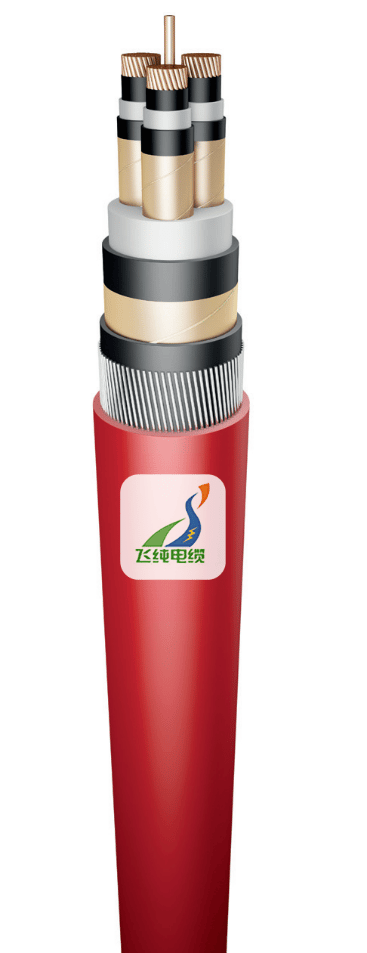
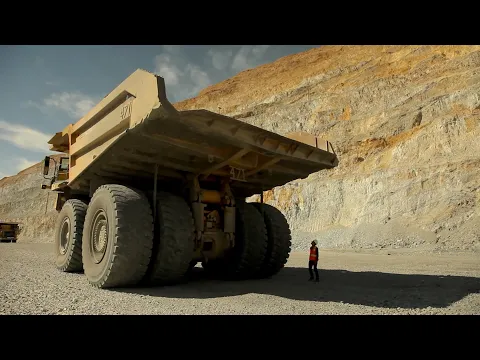
These mining power cables are designed for underground installations in mining environments where explosive atmospheres (methane or coal dust) may be present.
They are built to handle voltages up to 6 kV and are suitable for both methane and non-methane areas, including installations in inclined shafts and galleries.
Construction Details
Conductor:
Made of round, multi-stranded copper conductors (compact, Class 2 as per EN 60228).
Working Conductor Screen:
Each copper conductor is provided with its own screen. This can be made from either a conductive tape or a polyethylene-based conductive material.
Insulation:
The conductors are insulated with cross-linked polyethylene (XLPE), Type DIX 3 (according to PN-HD 620 S1:2002).
Individual Screen:
An additional individual screen is applied over the insulation. This is typically a wrap made of a conductive tape combined with a copper tape—or alternatively, a combination of conductive polyethylene and copper tape.
Core Assembly:
The working conductors are twisted around a central core (which can be a copper wire or strand) to improve the cable’s mechanical stability.
Filling Compound:
The spaces within the cable are filled with either unvulcanized rubber or a tire-derived compound to protect and support the internal structure.
Inner Sheath:
A PVC sheath (Type DMV 31, per PN-HD 620 S1:2002) covers the insulation, adding mechanical protection.
Armoring and Outer Sheath:
The cable is armored with a round steel wire layer.
Over the armor, a flame-retardant PVC outer sheath (also Type DMV 31 per PN-HD 620 S1:2002) is applied for extra protection.
Key Characteristics
Color Coding:
Insulation: Natural color
Outer Jacket: Red
Temperature Ratings:
(Note: Some values in the original text appear to be typographical errors. The typical operating values are given below.)Maximum Operating Temperature of Conductor: Approximately +90 °C
Minimum Ambient Temperature for Fixed Installation: Around –30 °C
Minimum Temperature During Installation (without heating): –50 °C
Maximum Temperature During a Short-Circuit: Approximately +250 °C
Mechanical Properties:
Minimum Bending Radius: 12 times the overall cable diameter (12 × D)
Test Voltage: 15 kV AC applied for 5 minutes at 50 Hz
Flame Propagation Resistance: Conforms to IEC 60332-1-2 and IEC 60332-3-24C standards
Tensile Strength: Maximum pulling force is 50 times the total cross-sectional area of the conductors (N)
Packaging:
Standard packaging is available in lengths of 500 or 1000 meters per drum, with options for other lengths and types upon request.
Applications
Usage:
These cables are intended for use in underground power distribution systems at mining facilities with a nominal voltage up to 6 kV.
They are certified for use in hazardous areas (methane explosion risk, classes A and B, and coal dust explosion risk).
The steel-armored version (using round or flat wires) is especially suited for installations in inclined shafts or galleries (with inclinations over 45°).
Certifications:
Recognized by certification bodies such as EMAG and WUG.
Cable Data and Performance
The technical tables provided include details for various cable sizes (e.g., 3×25, 3×35, 3×50, etc.). Key parameters include:
Dimensions & Construction:
Conductor Cross-Section: For example, “3×25” indicates three conductors, each 25 mm².
Nominal Thicknesses: Listed for insulation, inner sheath, and armor.
Overall Diameter & Weight: Approximate cable diameter and weight (in kg per km) are provided.
Electrical Properties:
Conductor Resistance: Maximum resistance per km at 20 °C is specified.
Current-Carrying Capacity: Given for various conductor sizes at an ambient temperature of 25 °C.
Inductance & Reactance: Unit inductance (in mH/km) and inductive reactance (in Ω/km) values are provided.
Correction Factors for Current-Carrying Capacity
Stacking Correction (Parallel Installation):
When cables are installed in parallel (stacked on top of each other), the current-carrying capacity must be reduced by a factor:1 cable: factor = 1.00
2 cables: factor = 0.93
3 cables: factor = 0.90
6 cables: factor = 0.87
9 cables: factor = 0.86
Ambient Temperature Correction:
For ambient temperatures above 25 °C, additional correction factors apply (for cables with a long-term operating temperature of about +90 °C):30 °C: factor = 0.96
35 °C: factor = 0.92
40 °C: factor = 0.88
45 °C: factor = 0.83
50 °C: factor = 0.78
55 °C: factor = 0.73
Frequently Asked Questions (FAQ)
1. What is the nominal voltage rating of this cable?
The cable is rated for 3.6/6 kV, making it suitable for mining installations that require up to 6 kV.
2. Why is this cable ideal for mining environments?
It is designed for harsh underground conditions, including hazardous areas with methane and coal dust, thanks to its robust construction, flame retardant outer sheath, and armoring.
3. What type of conductors does the cable use?
The cable uses round, multi-stranded copper conductors, compacted to meet Class 2 standards as per EN 60228.
4. How is the insulation constructed?
The insulation is made from cross-linked polyethylene (XLPE) of Type DIX 3, ensuring excellent electrical properties and resistance to high temperatures.
5. What screening features does the cable include?
Each conductor is individually screened using conductive tapes or conductive polyethylene with copper tape, and there is also an overall screen for enhanced electromagnetic compatibility.
6. What is the purpose of the steel wire armor?
The round steel wire armor provides mechanical protection against physical damage, which is essential in the rugged conditions found in mining operations.
7. Is the outer sheath flame retardant?
Yes, the outer sheath is made from a flame retardant PVC (Type DMV 31), conforming to IEC standards for flame propagation resistance.
8. What are the operating temperature ranges of the cable?
The cable is designed to operate with conductors at a maximum of +90 °C, can be installed in ambient temperatures as low as –30 °C (for fixed installations), and –50 °C during installation without heating.
9. What is the maximum temperature the cable can withstand during a short-circuit?
During a short-circuit, the conductor temperature can rise up to approximately +250 °C.
10. What is the minimum bending radius for installation?
The minimum bending radius is 12 times the overall diameter of the cable (12 × D), ensuring that the cable is not unduly stressed during installation.
11. How is the cable electrically tested for quality?
The cable undergoes a high-voltage test at 15 kV AC for 5 minutes at 50 Hz to ensure the integrity of the insulation.
12. Which flame propagation standards does the cable meet?
It complies with IEC 60332-1-2 and IEC 60332-3-24C standards, ensuring that the cable resists flame spread in hazardous conditions.
13. How are these cables packaged for shipment?
Standard packaging is offered in lengths of 500 or 1000 meters per drum, although custom lengths and packaging options are available upon request.
14. Can the cable be used in explosive atmospheres?
Yes, the cable is approved for use in hazardous mining environments, including areas with methane or coal dust explosion risks.
15. What certifications does this cable hold?
The cable is certified by recognized bodies such as EMAG and WUG, confirming its compliance with mining industry standards.
16. How is the current-carrying capacity determined?
The current-carrying capacity is specified for different conductor sizes. It is also adjusted using correction factors for multiple cable installations and varying ambient temperatures.
17. What correction factors apply when cables are installed parallel to each other?
*For parallel installations, the following correction factors apply:
1 cable: 1.00
2 cables: 0.93
3 cables: 0.90
6 cables: 0.87
9 cables: 0.86*
18. How does ambient temperature affect the cable’s current rating?
For ambient temperatures above 25 °C, additional correction factors must be applied (e.g., 0.96 at 30 °C, 0.92 at 35 °C, down to 0.73 at 55 °C) to adjust the current-carrying capacity appropriately.
19. How is the cable designed for mechanical stability in inclined shafts and galleries?
The conductors are twisted around a central core, and the cable is filled with a compound (such as unvulcanized rubber) and reinforced with steel armor, ensuring it maintains integrity even in shafts with steep inclines (above 45°).
20. How does the cable’s construction mitigate the risks inherent in mining operations?
Its robust insulation, individual and overall screening, flame retardant properties, and mechanical protection (steel armor and filling compound) all contribute to minimizing risks in explosive and physically challenging mining environments.
21. What electrical properties (like inductance and reactance) does the cable exhibit?
The cable has low unit inductance and reactance values, which help reduce power losses and ensure efficient energy transmission, an important factor for reliable mining operations.
22. What maintenance practices are recommended for this cable in the field?
Regular inspections for physical damage, adherence to proper bending and installation guidelines, and ensuring that correction factors for current capacity are applied based on the installation environment are all recommended to maintain long-term performance.


Type YHKGXSFoyn 3.6/6 kV Screened mining cables
Type YHKGXSFoyn 3.6/6 kV Screened Mining Cable is a robust, high-performance power cable designed for harsh underground mining environments. It features compact, multi-stranded copper conductors individually screened with conductive tape or polyethylene, and insulated with high-quality cross-linked polyethylene (XLPE). An additional overall screen, coupled with a flame-retardant PVC outer jacket and round steel wire armor, ensures superior electrical performance and mechanical protection. Engineered to operate reliably in explosive atmospheres and extreme temperatures, this cable meets stringent industry standards for safety and durability in both methane and coal dust hazardous areas.
6/30/20216 min read