
Type YHKGXSekyn Mining Cable 0.6/1 kV
Power cable, mining, with copper conductors, in an individual screen,
with cross-linked polyethylene insulation, in a PVC sheath, with screened auxiliary conductors, in a general screen and in a flame retardant PVC sheath
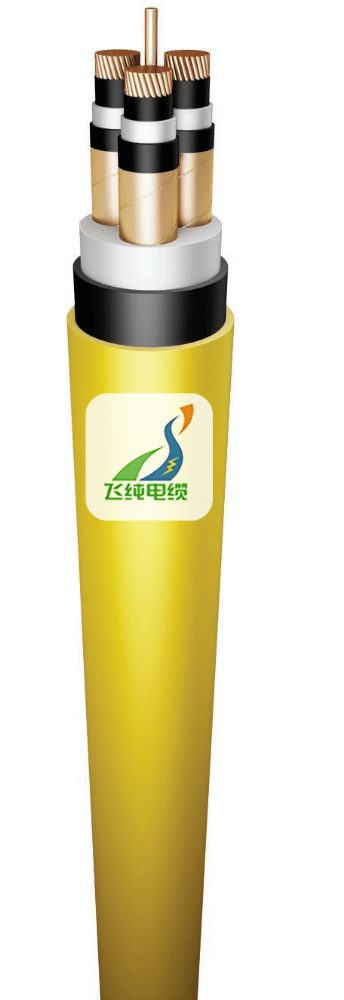
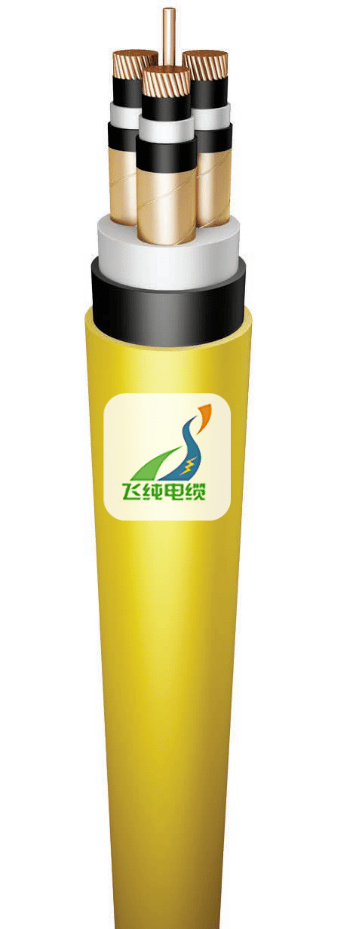
This cable is designed for underground mining power distribution networks with a nominal voltage up to 1 kV.
It is built to stringent standards (including ZN-TF 205:2006 and several PN and IEC standards) so that it can be safely used in hazardous mining environments—whether in non-methane areas or in zones where methane or coal dust explosions (classes A/B for coal dust and explosion risk categories “a”, “b”, “c” for methane) may occur. It also carries certifications such as EMAG and WUG.
Construction Details
Conductors
Material & Form: The cable uses copper conductors that are round, multi-stranded, and compressed (Class 2 in accordance with EN 60228).
Core Arrangement: The working conductors are twisted around a central core, which may itself be a single copper wire or a stranded copper rope.
Insulation & Sheathing
Primary Insulation: Each conductor is insulated with cross-linked polyethylene (XLPE) of type DIX 5, conforming to PN-HD 603 S1:2002.
Individual Screen: An individual shield is provided for each conductor. This screen can be made either by wrapping a semi-conducting tape or by an extruded process that incorporates copper wire combined with copper tape.
Filler Layer: Surrounding the conductors is a filler layer made from either non-vulcanized rubber or a tire-derived compound.
Inner Sheath: A PVC inner sheath (type DMV 6 per PN-HD 603 S1:2002) covers the insulated conductors.
Overall Screen: Over the inner sheath, a general screen is applied in the form of a copper tape wrap.
Outer Sheath: Finally, the cable is enclosed in an external flame-retardant PVC sheath (also of type DMV 6) designed to resist flame propagation.
Appearance
Insulation Color: Natural (the typical color of the polymer material).
Outer Sheath Color: Yellow.
Technical Characteristics
Temperature Ratings:
Operating Temperature: The cable’s conductors are designed to operate continuously at temperatures up to +90 °C.
Installation Temperatures: When permanently installed, the cable can be used in ambient temperatures down to –30 °C, and even at –50 °C during installation without pre-heating.
Short-Circuit Rating: During a short-circuit event, the conductor temperature may briefly rise up to approximately +250 °C.
Mechanical Flexibility:
Bending Radius: The minimum bending radius is specified as 12 times the overall cable diameter (D).
Tensile Strength: The maximum pulling (tensile) force is calculated as 50 times the total cross-sectional area (in mm²) of the working conductors.
Electrical Testing & Flame Resistance:
Test Voltage: The cable is tested at 4 kV AC (50 Hz) for 5 minutes.
Flame Spread Resistance: It meets the IEC flame propagation standards IEC 60332-1-2 and IEC 60332-3-24C.
Packaging:
Standard lengths are provided on drums of either 500 or 1,000 meters, though other lengths and packaging options are available on request.
Cable Dimensions and Performance Specifications
Two main tables provide detailed performance data:
Physical and Electrical Construction:
For various cable sizes (designations like 3x16/16, 3x25/16, 3x35/16, etc.), the specifications include:Nominal thicknesses for the insulation, inner sheath, and outer sheath.
Approximate overall cable diameter and weight (in kg/km).
Maximum conductor resistance at 20 °C.
For example:
A cable labeled 3x16/16 typically has an insulation thickness of about 1.1 mm, an inner sheath of 1.4 mm, an outer sheath of 1.8 mm, an overall diameter of approximately 27.8 mm, and a weight of about 1493 kg/km.Current-Carrying Capacity and Electrical Properties:
Another table lists, for various conductor cross-sectional areas (from 16 up to 185 mm²), the following:Current-Carrying Capacity: The rated current at an ambient temperature of +25 °C (e.g., a 16 mm² conductor is rated for approximately 104 A, while a 185 mm² conductor is rated for about 461 A).
Inductance and Reactance: The unit inductance (in mH/km) and the unit inductive reactance (in Ω/km) for each size.
Correction Factors for Installation Conditions
Parallel Installation (Stacking on Supports):
If multiple cables are installed in parallel (stacked on top of each other), the current-carrying capacity must be reduced using the following correction factors:1 cable: factor 1.00
2 cables: factor 0.93
3 cables: factor 0.90
6 cables: factor 0.87
9 cables: factor 0.86
Ambient Temperature Above +25 °C:
For environments with ambient temperatures higher than +25 °C, further correction factors apply (for cables designed with a long-term conductor temperature limit of +90 °C):At 30 °C: factor 0.96
At 35 °C: factor 0.92
At 40 °C: factor 0.88
At 45 °C: factor 0.83
At 50 °C: factor 0.78
At 55 °C: factor 0.73
These factors ensure that the cable’s performance is not overstressed under different installation scenarios.
Summary
In plain terms, the Type YHKGXSekyn Mining Cable 0.6/1 kV is a robust, flame-retardant, copper conductor cable with multiple layers of protection designed for the harsh and explosive-risk environments typical of underground mining. Its construction—with XLPE insulation, individual and overall screens, and durable PVC sheaths—ensures both electrical reliability and mechanical toughness.
Detailed specifications, including dimensions, current capacity, and installation correction factors, help engineers select the right cable size and understand how installation conditions might affect performance.
This explanation consolidates the Polish technical details into a clearer overview for design engineers and technical users who need to understand both the construction and the performance characteristics of this specialized mining cable.

Frequently Asked Questions (FAQ)
Q1: What is the primary application of the Type YHKGXSekyn Mining Cable 0.6/1 kV?
A1: This cable is designed for underground mining power distribution networks. It is particularly suited for hazardous mining environments where there is a risk of methane and coal dust explosions.
Q2: What is the nominal voltage rating of this cable?
A2: The cable is rated for nominal voltages up to 1 kV, making it ideal for low-voltage power distribution systems in mining operations.
Q3: What materials and construction techniques are used in this cable?
A3: The cable features copper conductors that are multi-stranded and compressed according to EN 60228 standards. It uses cross-linked polyethylene (XLPE) insulation, an individual screening layer (using semi-conductive tape or extruded methods with copper components), a filler layer, a PVC inner sheath, a general copper tape screen, and a flame-retardant PVC outer sheath.
Q4: How does the XLPE insulation benefit the cable’s performance?
A4: XLPE insulation provides excellent thermal resistance (with operating limits up to +90°C), superior electrical properties, and durability under harsh mining conditions, ensuring long-term reliability and safety.
Q5: What flame retardant features does this cable include?
A5: The outer sheath of the cable is made of flame-retardant PVC that meets IEC standards (IEC 60332-1-2 and IEC 60332-3-24C). This minimizes the risk of flame spread in explosive environments typically found in mining.
Q6: What temperature conditions can the cable withstand during operation and installation?
A6: The cable is designed to operate continuously at up to +90°C. It can be installed in ambient temperatures as low as –30°C (or –50°C during installation without pre-heating) and can handle short-circuit conditions with temperatures up to +250°C.
Q7: How does the cable ensure mechanical durability in mining environments?
A7: With a minimum bending radius of 12 times the cable’s overall diameter and a tensile strength rated at 50 times the sum of the conductor cross-sections, the cable is built to resist mechanical stresses during installation and operation in challenging mining settings.
Q8: What packaging options are available for this cable?
A8: The cable is typically supplied in reels of 500 or 1,000 meters. However, customized lengths and packaging configurations can be arranged to meet specific project requirements.
Q9: Are there any installation considerations when laying multiple cables together?
A9: Yes, when cables are installed in parallel (stacked on supports), the current-carrying capacity must be adjusted using correction factors. These factors depend on the number of cables laid together (e.g., 0.93 for two cables, 0.90 for three cables) and are further modified for ambient temperatures above +25°C.
Q10: Which standards and certifications does the cable meet?
A10: The cable complies with several important standards, including ZN-TF 205:2006 and PN-HD 603 S1:2002, and adheres to IEC flame resistance standards (IEC 60332-1-2, IEC 60332-3-24C). It is also certified by reputable bodies such as EMAG and WUG.


Type YHKGXSekyn Mining Cable 0.6/1 kV
Type YHKGXSekyn Mining Cable 0.6/1 kV is designed for underground mining operations where safety and durability are essential. It features multi-stranded copper conductors insulated with robust cross-linked polyethylene (XLPE) and individually shielded to ensure reliable electrical performance. The cable is built with several protective layers—a PVC inner sheath, a general copper tape screen, and a flame-retardant PVC outer jacket—to provide excellent resistance against high temperatures, mechanical stress, and fire hazards. Certified to meet strict industry standards, this cable is suitable for hazardous mining environments, including areas with methane and coal dust explosion risks, and performs reliably even under extreme temperature conditions.
6/30/20216 min read