
Type YHKGXSekFoyn 3.6/6 kV mining cables
Mining power cable with individual shield and copper core,
XLPE insulation, PVC sheath, overall shield,
Round steel wire armor, non-flammable PVC sheath
High performance fireproof, low smoke and halogen-free
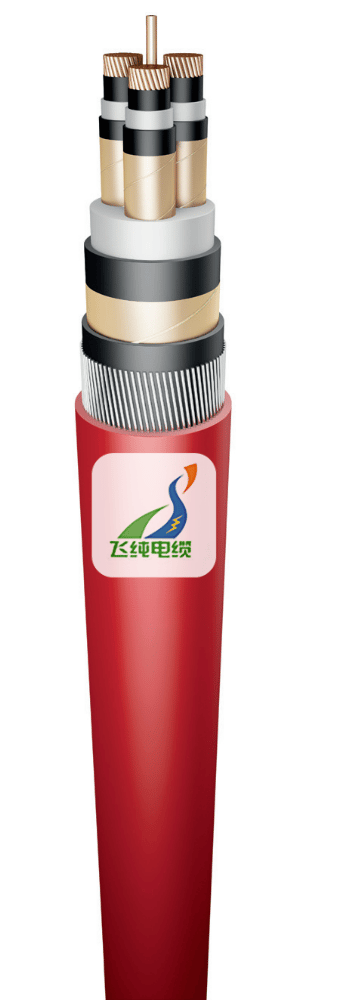
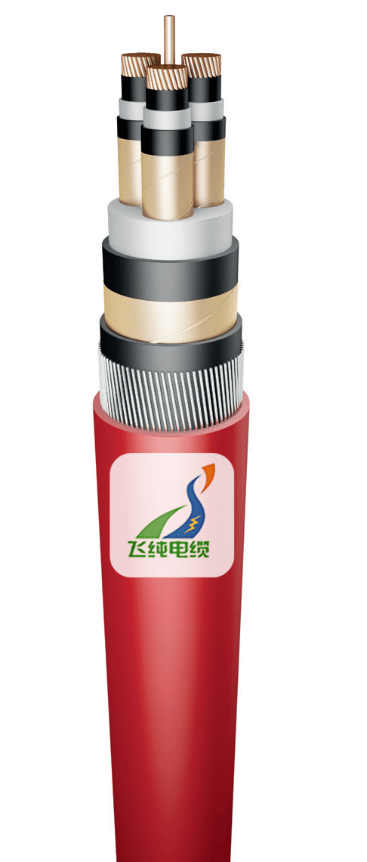
These mining power cables are designed for underground electrical installations in mining operations with a nominal voltage up to 6 kV.
They are built to be highly durable, fire-resistant, and safe for use in hazardous areas (including both methane and coal dust explosion risks). Key features include:
High Safety: Fireproof, low smoke, and free of halogens.
Robust Construction: Armored with round steel wires for mechanical protection.
Efficient Design: Copper conductors with individual and overall shielding.
Construction Details
Conductor:
Material: Multi-stranded, round copper conductors (classified as Class 2 per EN 60228).
Shielding: Each conductor has its own shield made from either a conductive tape or a conductive polyethylene material combined with copper tape.
Insulation:
Made of cross-linked polyethylene (XLPE, type DIX 3 as per PN-HD 620 S1:2002).
Inner Sheath (Filler):
A non-vulcanized rubber or polwinit compound fills the space around the twisted conductors.
Inner PVC Sheath:
Made from PVC (DMV 31 type, as specified by PN-HD 620 S1:2002).
Overall Shield:
An additional layer of protection provided by wrapping the cable with copper tape.
Armor:
The cable is further protected by a layer of round steel wire armor.
Outer Sheath:
An external PVC sheath (using a flame-retardant, non-propagating formulation similar to polwinit) protects against environmental hazards.
Electrical and Mechanical Characteristics
Operating Temperatures:
Maximum Conductor Temperature: +90°C during normal operation.
Short-Circuit Temperature: Up to +2500°C (brief, during fault conditions).
Ambient Temperatures: Suitable for permanent installation down to approximately –30°C and for laying without heating down to –50°C.
Bending Radius:
The cable must not be bent tighter than 12 times its overall diameter.
Testing:
Withstands a test voltage of 15 kV AC for 5 minutes at 50 Hz.
Meets international flame propagation standards (IEC 60332-1-2 and IEC 60332-3-24C).
Mechanical Strength:
The maximum tensile strength is rated at 50 times the total cross-sectional area of the conductors (in mm²).
Packaging Options:
Typically supplied in drums of 500 or 1000 meters. Custom lengths and packaging are also available.
Applications
These cables are intended for use in underground mining electrical networks, particularly where:
The supply voltage does not exceed 6 kV.
The installation environment may be subject to methane or coal dust hazards (with varying degrees of explosion risk).
The cable is laid in mine shafts or inclined workings (including slopes greater than 45°).
Certification and Approvals
Certifications:
Approved by bodies such as EMAG and WUG.
Environmental Compliance:
RoHS compliant.
Temperature Approvals:
Approved for use with a maximum operating temperature of +90°C and a minimum of –5°C (for the cable as a whole).
Additional Technical Data
Detailed tables (not shown here) provide information on:
Cable Sizes:
Various sizes are available (e.g., 3x25 mm², 3x35 mm², etc.) with corresponding values for insulation thickness, sheath thickness, armor thickness, overall diameter, weight per kilometer, and maximum conductor resistance at 20°C.
Current-Carrying Capacity:
Each cable size has a specific current rating (at an ambient temperature of +25°C) along with unit inductance and inductive reactance values.
Correction Factors:
If multiple cables are laid together (stacked), current ratings should be adjusted using specified correction factors.
When ambient temperatures exceed +25°C, additional correction factors must be applied (for example, at 30°C the capacity is multiplied by 0.96, at 35°C by 0.92, etc.).

Frequently Asked Questions (FAQ)
Q: What is the nominal voltage rating of these cables?
A: They are designed for applications up to 6 kV.
Q: What are the primary construction features of this cable?
A: It has copper conductors with individual shielding, XLPE insulation, an overall copper tape shield, round steel wire armor, and a flame-retardant PVC outer sheath.
Q: Why is XLPE insulation used in this cable?
A: XLPE offers excellent thermal and electrical performance, ensuring durability and safety in harsh mining environments.
Q: What is the function of the individual shields on the conductors?
A: They reduce electrical interference and enhance the cable's performance, especially in electrically noisy mining settings.
Q: How does the overall copper tape shield contribute to cable safety?
A: It protects against external electromagnetic interference and ensures effective grounding, which is vital for safe operation.
Q: What role does the round steel wire armor play?
A: It provides mechanical protection against physical damage, impacts, and rodent attacks typical in mining sites.
Q: Is this cable flame-retardant?
A: Yes, it is designed to be fireproof, produces low smoke, and is halogen-free, meeting stringent safety requirements.
Q: Which flame propagation standards does the cable comply with?
A: It meets IEC 60332-1-2 and IEC 60332-3-24C standards.
Q: What is the maximum operating temperature for the cable's conductor during normal use?
A: The conductor can operate at temperatures up to +90°C.
Q: How does the cable perform under short-circuit conditions?
A: It can withstand short-circuit temperatures up to +2500°C for brief periods.
Q: What are the ambient temperature limits for installing this cable?
A: It is suitable for permanent installations at ambient temperatures down to –30°C and for laying without pre-heating down to –50°C.
Q: What is the minimum bending radius recommended for installation?
A: The cable should not be bent tighter than 12 times its overall diameter.
Q: Can these cables be used in explosive atmospheres?
A: Yes, they are approved for use in both metanic and non-metanic zones, including areas with coal dust explosion hazards.
Q: How are these cables typically packaged?
A: They are supplied in drums of 500 or 1000 meters, with options for custom lengths and packaging available.Q: What electrical test does the cable undergo to ensure reliability?
A: It is subjected to a 15 kV AC test for 5 minutes at 50 Hz.
Q: How does the cable's design help prevent flame spread?
A: The use of non-flammable materials and specialized insulation and sheath compositions limits flame propagation.
Q: Are the cables suitable for both power and control circuits?
A: They are primarily designed for power distribution in mining, but their robust construction may also support control circuits with appropriate design considerations.
Q: What type of copper conductor is used in the cable?
A: The cable utilizes multi-stranded, round copper conductors conforming to EN 60228 Class 2 standards.
Q: What purpose does the non-vulcanized rubber or polwinit filler serve?
A: It maintains the cable's round shape, provides mechanical support, and separates the conductors effectively.
Q: How does the cable ensure safe performance in high-temperature mining environments?
A: It is engineered to operate continuously at up to +90°C, ensuring stable performance even under elevated temperatures.
Q: What factors must be considered when installing multiple cables in parallel?
A: Correction factors based on the number of cables and ambient temperature must be applied to maintain safe current-carrying capacity.
Q: How does the cable manage electromagnetic interference (EMI)?
A: Both individual and overall shielding effectively reduce EMI, protecting sensitive mining equipment.
Q: What is the role of the inner PVC sheath?
A: It provides additional insulation and protection for the filler and underlying conductors.
Q: Are there any special installation guidelines for this cable in mining sites?
A: Yes, proper adherence to bending radii, applying correction factors for grouped installations, and following installation best practices are essential.
Q: How is the cable rated for mechanical strength?
A: It is designed to have a maximum tensile strength of 50 times the sum of the cross-sectional areas of the conductors (in mm²).
Q: What certifications does the cable have?
A: It complies with standards such as ZN-TF-203:2014, PN-HD 620 S1:2002, EN 60228, and flame propagation standards like IEC 60332.
Q: How does the cable perform under electrical fault conditions?
A: Its robust construction and high thermal tolerance help mitigate risks during faults, ensuring safety and continuity of operation.
Q: What is the expected lifespan of the cable in a mining environment?
A: With proper installation and routine maintenance, these cables are built for a long operational life in harsh conditions.
Q: Is routine maintenance required after installation?
A: Routine inspections and adherence to maintenance guidelines for mining electrical installations are recommended to ensure ongoing performance.
Q: How does the cable support high current loads?
A: Its optimized conductor design, adequate insulation, and proper shielding enable efficient handling of high current demands typical in mining applications.
Q: How are thermal expansion and contraction managed by this cable?
A: The flexible design and robust materials allow the cable to accommodate thermal fluctuations without degrading performance.
Q: Can the cable withstand physical stresses and movements common in mining?
A: Yes, the steel wire armor and overall robust construction are specifically designed to endure mechanical stresses and movements in mining environments.
Q: How does the cable resist environmental hazards such as moisture and chemicals?
A: The outer PVC sheath is formulated to resist moisture, chemicals, and other contaminants frequently encountered in mining sites.
Q: Where can I find detailed specifications such as weight, diameter, and resistance values?
A: Detailed technical tables are provided in the product documentation, which outline dimensions, weights per kilometer, and conductor resistance for various cable sizes.


Type YHKGXSekFoyn 3.6/6 kV mining power cable
Type YHKGXSekFoyn 3.6/6 kV mining cable – a robust solution designed for harsh underground mining environments. This cable features multi-stranded copper conductors with individual shields to minimize interference, wrapped in high-performance cross-linked polyethylene (XLPE) insulation. An overall copper tape shield and a layer of round steel wire armor further protect against electrical disturbances and mechanical damage. Finished with a flame-retardant, low-smoke PVC outer sheath, it meets stringent safety standards and is suitable for use in explosive atmospheres. Engineered for voltages up to 6 kV, these cables offer reliable, long-lasting performance in challenging mining applications.
6/30/20216 min read